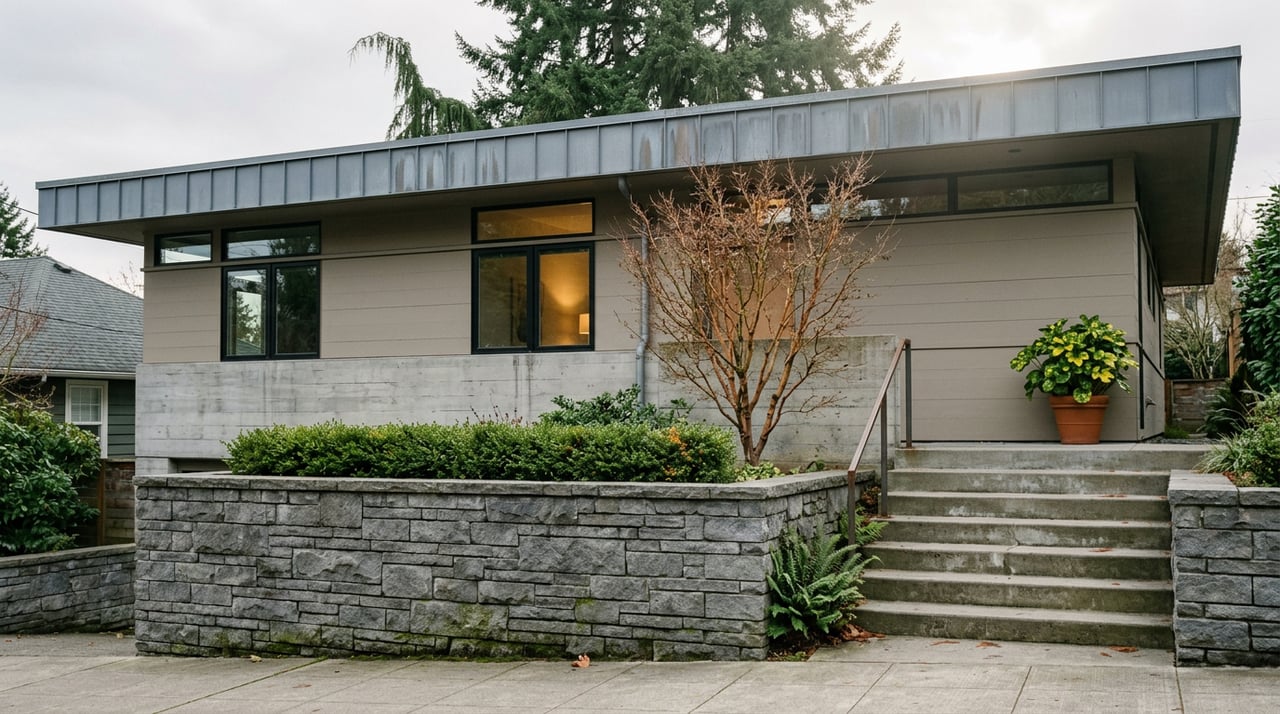
Ask two Leschi owners how hard it was to add a primary suite over the garage, and you can get wildly different answers even when both houses sit four blocks apart with the same slice of Lake Washington in the windows. One owner says her contractor pulled the permit in about six weeks. The other has been in review for most of a year, waiting on a geotechnical report, an arborist report, and a topographic survey before the city will even tell him whether he needs an exemption in the first place.
The gap has nothing to do with the size of the addition or which contractor drew the plans. It comes down to a boundary that runs 200 feet inland from the water, a line that has nothing to do with the view and everything to do with which side of it the lot happens to sit on.
The Boundary Line You Can't See From the Street
Leschi's terrain does most of the work of confusing buyers before anyone even opens a permit application. Homes here range from true Lakeside Avenue waterfront, the kind with a dock, a boat lift, and lawn running down to the shore, to hillside houses "perched high up off the street," as one recent listing put it, with the same Cascade and Bellevue skyline views but no wet feet involved. From the street, both read as premium Leschi property. From the city's permitting desk, they are two different files.
Seattle's shoreline district covers Lake Washington and every parcel within 200 feet of it, measured from the water's edge inland, regardless of elevation. A house halfway up the hillside can sit entirely inside that boundary even if you'd need binoculars to see the lake from the front steps. Anything that qualifies as substantial development inside that district, meaning it costs more than $8,504, the current threshold set by the Washington State Department of Ecology, generally needs a Shoreline Substantial Development Permit or a documented exemption before a building permit gets issued.
Separately, much of Leschi's slope also carries a Steep Slope Environmentally Critical Area designation, the kind of overlay that shows up on a GIS parcel search but rarely on a listing sheet.
Where the Relief Valve Runs Out
Here's the part that catches people off guard. That relief option isn't available everywhere the slope shows up. Seattle's own construction guidance states it plainly:
"Relief from prohibition on steep slope development is not applicable for waterfront lots."
A true waterfront lot with the identical slope cannot. The moment a parcel sits inside both the shoreline district and a steep slope ECA, the city requires a separate ECA exemption determination just to establish whether a Shoreline Variance is even necessary. There's no shortcut version for waterfront. You go through the full review.
This is the mechanism that explains why the two owners in our opening story had such different timelines.
What Waterfront Actually Costs You Later
None of this shows up in a typical walkthrough. It surfaces only when someone applies for a permit, which means it often surfaces after closing, not before. The supporting documents the city typically asks for on a waterfront ECA exemption include:
- A site-specific geotechnical report addressing foundation design, retaining walls, drainage, and slope stability
- An arborist report if mature trees factor into slope stability or removal
- A current topographic survey showing contours, steep slopes, and the ordinary high water line
- Historical street grade profiles and photographs supporting the application
Each of those is a separate consultant, a separate invoice, and separate lead time before the city even opens the file. None of it is optional paperwork you can skip by hiring a faster contractor.
Dock work carries its own version of this. As of August 2023, the state's substantial development threshold for a residential dock built or replaced in fresh water sits at $28,000, or $13,900 for other freshwater docks. Given how many Leschi waterfront listings mention a rebuilt dock or a boat lift as a selling feature, that threshold matters more here than in almost any other Seattle neighborhood. Bulkhead work is its own uphill climb too. New bulkhead construction is rarely approved unless erosion is actively threatening the home and softer shoreline alternatives genuinely aren't feasible, according to guidance from the regional shoreline stewardship group Shore Friendly.
Reading Two "View Lot" Listings the Right Way
If you're comparing a hillside Leschi listing against a true waterfront one, the marketing language often looks nearly identical. The permitting reality doesn't. A useful way to separate them before you write an offer:
Likely a hillside, non-shoreline lot if:
- The listing describes the home as set back from the water, elevated, or "above the street"
- There's no dock, moorage, or direct shore access mentioned
- A parcel search shows a Steep Slope ECA but no shoreline district overlay
Likely inside the shoreline district if:
- The property fronts Lakeside Avenue or otherwise touches or sits within 200 feet of Lake Washington
- The listing mentions a dock, bulkhead, boat lift, or moorage
- Any future addition, deck expansion, or new structure would fall inside that 200-foot band
Neither category is better or worse. They're simply different bets on how much friction you'll face the day you want to change the footprint of the house.
What This Means for the Numbers
This is where the price data starts to make more sense. Northwest Multiple Listing Service figures show Leschi's single-family homes carried a trailing six-month median sale price around $1,599,000, while condos in the same neighborhood listed at a median of roughly $479,000 as of late June 2026. That's an enormous spread for one small neighborhood, and lot type explains a real share of it. A flat interior lot, a hillside view lot, and a true waterfront parcel aren't competing in the same category even when the square footage looks similar on paper.
Zillow's home value index put the average Leschi home at just over $1.1 million as of the end of May 2026, down modestly from a year earlier, and separate listing data from early August showed the neighborhood's recently sold homes carrying a median list price around $1.2 million with an average of 44 days on market and roughly one offer per listing. None of that pricing tells you which side of the shoreline boundary a given house sits on. That's a question you have to ask directly, because it changes what you're actually buying beyond the view.
If You're Comparing Leschi Listings Right Now
A short list worth working through before you write an offer, whether you're buying your own next home or you've inherited a Leschi property and are weighing what to do with it:
- Ask your agent to pull the parcel's Environmentally Critical Areas layer and shoreline district status before you fall in love with the floor plan
- If the home has ever had permit work done, ask whether it required a Shoreline Substantial Development Permit, a shoreline exemption, or an ECA exemption, and how long that process took
- Budget realistically for a geotechnical report and topographic survey if you're waterfront and planning any addition, not just a full rebuild
- If a dock, bulkhead, or moorage is part of the appeal, ask when it was last permitted and whether replacement value would trigger the state's substantial development threshold
- For estate or probate sales where heirs are deciding whether to renovate, sell as-is, or build new, this distinction can shape the entire timeline and should factor into that decision early, not after an offer is already written
Frequently Asked Questions
Does this only affect new construction, or remodels too? It applies to anything that counts as substantial development, meaning the cost or fair market value clears the state's threshold, currently $8,504. A meaningful kitchen bump-out, deck rebuild, or addition can trigger the same review as new construction.
My home is on the hillside but I can still see the water. Does the 200-foot line still apply to me? The line is measured from the water's edge inland, not by sightline. A hillside lot can sit entirely inside the shoreline district even if it's well above the shore, so a view alone doesn't tell you which side of the boundary you're on. A parcel search settles it.
Would this show up in a standard seller disclosure? Check before closing rather than after.
Leschi rewards patience and a little homework, whether you're comparing a hillside lot against true waterfront, planning a remodel, or sorting out next steps on a property you've inherited. If you'd like a second set of eyes on a specific Leschi address, from what the parcel's overlays actually say to what a past permit history means for your plans, the Exact Home Team has spent nineteen years working this exact stretch of shoreline and hillside. You can also browse current Leschi listings or get a sense of where your own property stands with a home value check. Let's Get Started.
This article is general information, not legal, tax or financial advice. Consult a qualified professional about your situation.