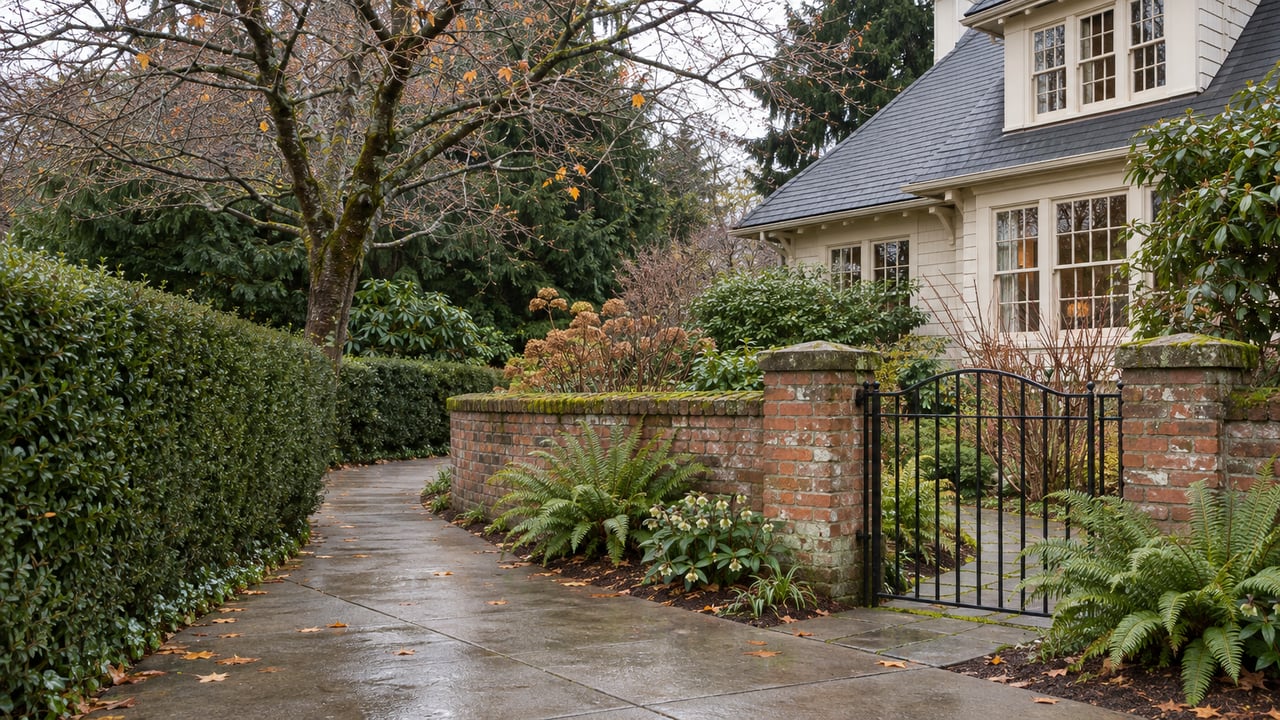
A bus now leaves E Madison St and 28th Ave E for downtown about every six minutes on weekdays. A few blocks east along Madison, the bus is Route 11, which runs about every 20 minutes. If you're comparing Washington Park with its neighbors this winter, the walk from a front door to that corner is one of the things that sets two similar houses apart, and October's market numbers give you time to price it.
Fourteen minutes from 28th Avenue East
King County Metro's RapidRide G Line opened on Saturday, September 14, 2024, as Capitol Hill Seattle Blog reported. It runs 2.5 miles from downtown through First Hill and Capitol Hill to Madison Valley. The line ends at Washington Park's northwest corner. The inbound terminal is E Madison St at 28th Ave E and the outbound stop is at 27th Ave E. Farther west, the stop pairs at 23rd/24th Ave E and 22nd Ave serve the blocks closer to the Central District.
The current Metro G Line timetable runs from August 29, 2026, through March 26, 2027. It schedules weekday buses about every six minutes from early morning into early evening and about every 15 minutes later at night. One sample weekday trip leaves 28th Ave E at 6:10 a.m. and reaches 1st Ave and Spring St downtown at 6:24 a.m. In August 2024, just before the line opened, Commute Seattle put the ride at 16 minutes at peak and as little as 12 off-peak.
A little east along Madison, the commute works differently. When the G Line launched, Metro moved Routes 11 and 12 off parts of Madison Street to cut duplication. Route 11 still connects Madison Park, starting at E McGilvra St and 42nd Ave E, with the 28th Ave E stop and downtown. Under the Route 11 schedule for the same August 2026 to March 2027 period, weekday morning buses come about every 20 minutes, at 7:15, 7:34, 7:53, 8:13 and 8:33 a.m.
| Starting point | Route | Weekday daytime frequency, Aug 2026 to Mar 2027 timetable |
|---|---|---|
| E Madison St & 28th Ave E | RapidRide G Line | About every 6 minutes, about every 15 in later evening |
| E McGilvra St & 42nd Ave E, Madison Park | Route 11 | About every 20 minutes |
So the deciding question for a Washington Park house is how far the front door is from the corner of 28th and Madison. That's a walk you can time before you write an offer, and two houses with the same listing description can differ on it by a lot.
The ridership shows the line has held its riders
The G Line has kept growing since it opened. Metro reported about 3,500 weekday riders when service began in September 2024 and nearly 6,300 average weekday riders by the end of July 2025 in its one-year update from September 2025. In April 2026, The Seattle Times reported weekday ridership of about 6,600 in recent months, 89% above the first month.
There are practical caveats. The same Seattle Times story, citing Metro's 2025 system evaluation, reported that the G Line ran at least 5.5 minutes late more than 20% of the time in 2025. It also reported that the steel plates at three center-road stops came out in March 2026 after 19 months, at an estimated repair cost of about $650,000. If your mornings run on a tight schedule, the six-minute headway is the number to plan around and the 14-minute trip is the best case.
The city's District 3 neighborhood profile describes the Madison Valley stretch of E Madison Street as a run of locally owned cafes, restaurants, shops and services, close to Washington Park Playfield and the Arboretum, with frequent G Line service downtown. For a house near 28th, that means the bus stop and the neighborhood's daily errands are on the same few blocks.
What Central Seattle's October numbers add
You have time to weigh the walk to 28th because the market is giving buyers some room. In the NWMLS King County breakout for October 2026, Map Area 390, which NWMLS names Central Seattle, had a residential median closed price of $1,250,000, up 7.81% from $1,159,475 in October 2025. Active listings rose to 259 from 220 a year earlier, a 17.73% increase. Pending sales fell to 55 from 68 and closed sales fell to 67 from 76. Months of inventory stood at 3.87.
The median rose while listings piled up and pending sales dropped, which suggests that the Central Seattle homes that did close in October were priced firmly and that buyers are being selective. With only 67 closings across a broad map area, the median depends heavily on which houses happened to sell. We wrote about that effect in Madison Park's median price post. The same October breakout shows all of King County at 4.32 months of inventory and a residential median of $851,250, down 4.06%. The Eastside was at 4.75 months, with a median of $1,247,500, down 9.27%. Central Seattle held its prices better than either.
County-wide, The Seattle Times reported on November 6 that King County's October median single-family sale price was $925,000, down 7% year over year. Pending single-family sales were down 16%, and mortgage rates averaged 7.2% at the end of October.
Put that together and a Washington Park buyer this winter isn't getting a discount on the neighborhood, since Central Seattle's prices held. What you do get is more listings to compare and fewer buyers competing for each one. That's the setting for comparing houses on things a portal photo can't show, starting with the walk to the bus.
Reading a Washington Park listing this winter
Start with the walk. A house near the 28th Ave E corner gets a six-minute bus to 1st and Spring on weekday days. A house farther along Madison toward Madison Park gets Route 11 every 20 minutes, or a longer walk back to the G Line. If you'll commute downtown, time the walk at the hour you'd actually leave. The difference is something you can put a value on.
Next, check the evening schedule. After early evening the G Line drops to about every 15 minutes, and in 2025 it ran at least 5.5 minutes late more than 20% of the time, so a late commute home is worth timing too.
Then look at the inventory. Central Seattle had 259 active listings in October 2026, against 220 a year earlier, so you can compare more than one house near the corridor before committing. For background on the neighborhood itself, our Washington Park neighborhood page and Madison Park page are good next stops, and our buyer resources cover how we put an offer together.
A few questions buyers ask about the Madison corridor
Where exactly does the G Line end? Metro's current timetable lists the Madison Valley terminal as E Madison St and 28th Ave E for inbound trips and E Madison St and 27th Ave E for outbound trips.
Does the G Line run on weekends? Yes. Metro's September 2025 update described weekend service about every ten minutes, and the current timetable includes Saturday and Sunday schedules.
How does Madison Park's bus compare? Route 11 runs from E McGilvra St and 42nd Ave E through the 28th Ave E stop to downtown, about every 20 minutes on weekday mornings under the current schedule.
If the walk to 28th and Madison will shape which Washington Park house you choose, bring that question to Exact Home Team and we'll talk it through house by house. Let's Get Started.